As global solar power installations continue to expand, an increasing number of photovoltaic (PV) modules are approaching the end of their operational lifespan. Solar panel recycling has become an essential part of the renewable energy recycling industry, creating new opportunities for sustainable waste management and material recovery.
Efficient PV module dismantling, mechanical shredding, and material separation technologies play a crucial role in recovering valuable resources while reducing environmental impact.
1. What Valuable Materials Can Be Recovered from Solar Panels?
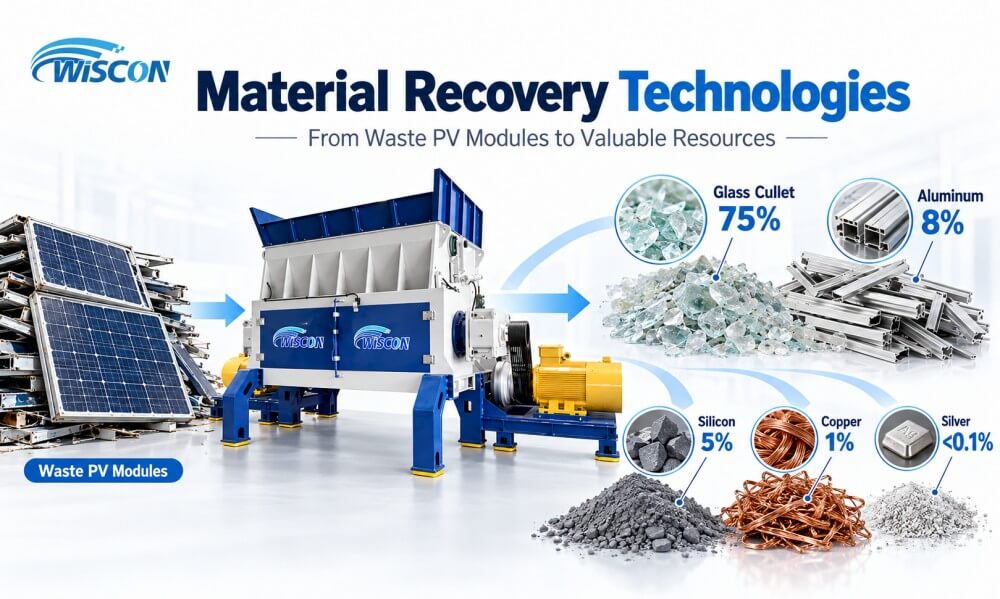
Crystalline silicon solar panels contain several recyclable materials, including glass, aluminum, silicon, copper, and silver.
The approximate material composition of a typical crystalline silicon PV module is:
Material
Approximate Weight Percentage
Glass
75%
Aluminum
8%
Silicon
5%
Copper
1%
Silver
Less than 0.1%
Actual percentages vary depending on the panel design, manufacturer, and production year.
Aluminum and copper can be recovered through established recycling processes. Glass can be reused in suitable industrial applications, while silicon and silver recovery typically requires more advanced separation and purification technologies.
2. How Does the Solar Panel Recycling Process Work?
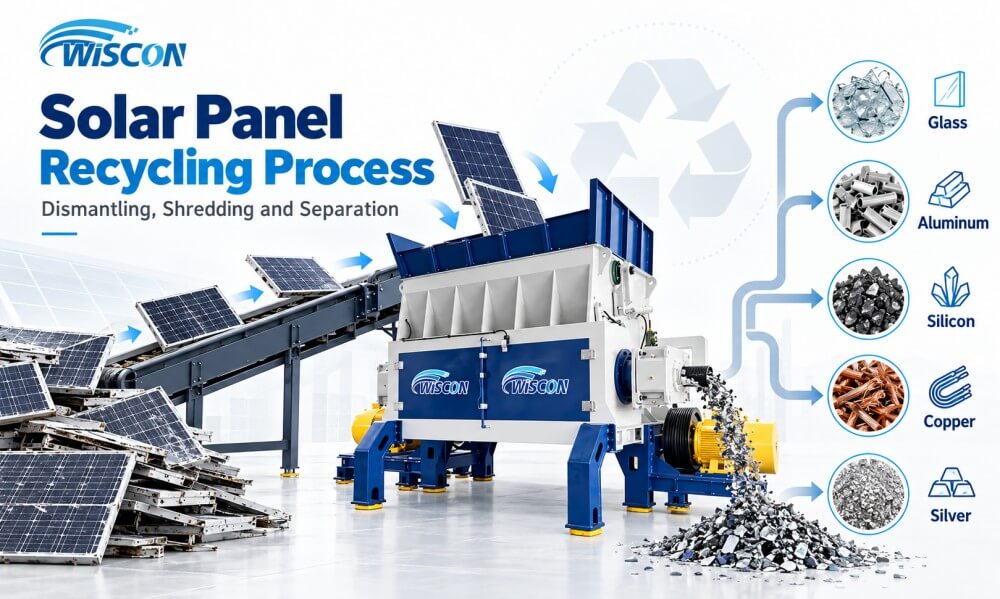
A typical solar panel recycling process involves four main stages: pretreatment, dismantling, size reduction, and material separation.
First, junction boxes, cables, and aluminum frames are removed to recover easily accessible components.
Next, the remaining laminated solar panels undergo mechanical crushing or shredding to reduce their size and prepare the material for downstream separation.
Screening and physical separation technologies are then used to recover glass, metals, and silicon-containing fractions.
However, the EVA encapsulation layer creates challenges because it bonds the glass and solar cells together. Additional technologies, such as thermal separation and specialized delamination processes, may be required to improve material recovery.
For higher-value materials such as silver and silicon, further chemical refining may be necessary.
3. Wiscon Solar Panel Recycling Equipment and Solutions
Choosing suitable solar panel recycling equipment is essential for improving processing efficiency, operational stability, and material recovery performance.
Wiscon focuses on mechanical size-reduction and material handling solutions for industrial recycling applications.
For waste photovoltaic modules, Wiscon can explore equipment configurations involving shredding,crushing, conveying, screening, and material separation according to specific project requirements.
An effective recycling system must consider several technical factors, including feedstock dimensions, required processing capacity, particle size distribution, and downstream separation requirements.
Excessive crushing may increase material contamination and reduce the economic value of recovered resources. Therefore, selecting the appropriate size-reduction technology is critical to achieving efficient PV module recycling.
4. Future Trends in Solar Panel Recycling
The global solar recycling industry is moving toward automated dismantling, advanced material separation, and high-purity resource recovery.
According to research by the International Energy Agency (IEA), under its net-zero pathway scenario, recovered silver from end-of-life solar panels could potentially meet nearly 70% of the photovoltaic industry’s silver demand between 2040 and 2050.
As recycling volumes increase, companies will need to focus on reducing processing costs, improving material purity, and developing scalable recycling systems.
With increasing demand for renewable energy recycling technologies, Wiscon aims to support industrial recycling projects through practical equipment solutions for mechanical processing and material preparation.
Efficient solar panel recycling is not simply about waste disposal. It is an important step toward establishing a circular economy for renewable energy materials.
FAQ
Q1: Can solar panels be recycled?
Yes. Crystalline silicon solar panels contain recyclable materials such as glass, aluminum, copper, silicon, and silver. Recovery efficiency depends on the recycling technology and module construction.
Q2: What equipment is used for solar panel recycling?
Industrial solar panel recycling systems may include dismantling equipment, shredders, crushers, conveyors, screening machines, and material separation systems.
Q3: What is the main challenge in recycling photovoltaic modules?
One of the main challenges is separating the EVA encapsulation layer from glass and solar cells without excessive material contamination or processing costs.
Q4: How can Wiscon support solar panel recycling projects?
Wiscon focuses on industrial size-reduction and material handling equipment. Suitable system configurations can be evaluated based on feedstock characteristics, processing capacity, and downstream material recovery requirements.


 3. Wiscon Solar Panel Recycling Equipment and Solutions
 FAQ
FAQ Wind and Solar Recycling: Solar Panel Dismantling and Material Recovery Technologies
 Crop Straw Shredder Supports Efficient Agricultural Biomass Recycling
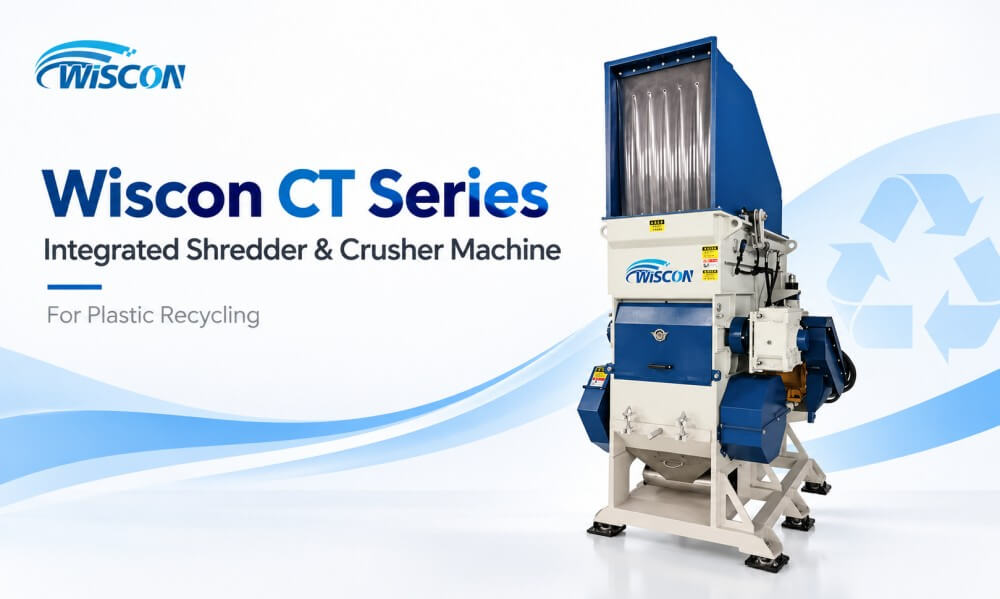 Why Are Integrated Shredder and Crusher Machines Gaining Attention in Solid Waste Recycling?
 200L Plastic Drum Shredder: How to Prevent Jamming and Improve Recycling Efficiency
 Is Leather Waste Recycling Profitable?