Turn Walnut Shell Waste into Profitable Biomass Fuel
Walnut shell waste is no longer just a disposal issue. With the right processing system, it can be converted into densified biomass fuel with real commercial value. Published studies on walnut-shell-derived densified fuels report lower heating values around 16.9–18.8 MJ/kg, ash content around 1.31%–2.98%, and moisture near 8.25% under tested conditions, indicating that walnut shells have strong potential as a fuel-grade biomass material.
Wiscon provides complete walnut shell biomass pellet production lines designed for processors and recyclers who want to turn bulky shell waste into uniform, saleable fuel pellets. The line can cover shredding, impurity removal, crushing, pelletizing, dust collection, and optional cooling and packing, depending on your project scale and raw material condition. Industry testing and ISO biofuel specifications both show that fuel quality depends heavily on moisture control, densification quality, and stable raw material preparation.
 Why Walnut Shells Are a Valuable Biomass Fuel Material
For walnut processors, shell waste often creates several practical problems: large storage volume, difficult handling, dust accumulation, and fire risk during stockpiling. In many plants, shells are treated as a low-value residue, even though the material itself has a relatively favorable fuel profile. In combustion and densification studies, walnut shell pellets and briquettes have shown energy values in the same practical range as many commercial biomass fuels.
When properly processed, walnut shells offer several measurable advantages:
- LHV typically reported at about 16.9–18.8 MJ/kg
- Ash content reported at about 1.31%–2.98%
- Moisture around 8%–12% is generally favorable for densification
- Densified products can reach about 950–1056 kg/m³ in briquetting tests
- Mechanical durability above 94% has been reported in walnut shell briquettes under suitable conditions
These numbers matter because they directly affect pellet quality, transport efficiency, storage stability, and customer acceptance in the biomass fuel market. Rather than selling raw shell waste in bulk, many processors can improve material value by converting it into a denser, cleaner, and easier-to-handle fuel product.
 What a Walnut Shell Pellet Line Must Solve
A walnut shell pellet project is not just about pressing material into shape. In practice, the line must solve three core problems.
1. Size Reduction
Raw walnut shells are irregular and bulky, so they cannot enter the pellet mill directly. They need pre-shredding and fine crushing to reach a more uniform particle size suitable for densification. Research on pelletizing also indicates that smaller and more consistent particle size improves product strength and process stability.
2. Moisture Control
Moisture is one of the most important variables in pellet production. Studies on biomass agglomeration show that product strength and durability typically improve as moisture rises to an optimum range of about 8%–12% wet basis, while higher moisture ranges of 12%–20% may help densification under some room-temperature conditions. In other words, raw material that is too dry or too wet can both hurt pellet quality.
3. Product Density and Durability
Densified biomass must be strong enough for transport, storage, and end use. In walnut shell briquetting tests, researchers reported densities around 1040 kg/m³ and durability above 94% at a compaction pressure of 66 MPa and process temperature of 140 °C. A broader data range in the same study showed briquette density between 950 and 1056 kg/m³, exceeding the 900 kg/m³ minimum referenced for wood briquettes in UNE EN ISO 17225-3:2021.
Wiscon Walnut Shell Biomass Pellet Line
Wiscon designs walnut shell pellet lines around the actual condition of the feedstock, not just the name of the material. If your shells contain fines, metal, mixed impurities, or variable moisture, the process layout should reflect that from the start.
A typical line may include:
Feeding → Pre-shredding → Magnetic Separation → Air Separation → Fine Crushing → Pelletizing → Dust Collection → Cooling / Packing
This process layout is built to improve three critical outcomes:
- cleaner feedstock before pelletizing
- more stable pellet mill operation
- better finished fuel quality in terms of density, ash control, and combustion consistency
Because ISO maintains dedicated standards for solid biofuel classification, bulk density, ash testing, moisture determination, calorific value, and mechanical durability, a serious project should be designed with testability and specification control in mind from the beginning.
 Typical Fuel Data You Can Discuss with Buyers
For customer communication, investors, and project evaluation, the following figures are useful reference points for walnut-shell-based densified fuels:
- Lower heating value:about 9–18.8 MJ/kg
- Ash content:about 31%–2.98%
- Reference moisture in tested pellets:about 25%
- Densified briquette density:about 950–1056 kg/m³
- Mechanical durability:above 94% in published briquetting results
- Practical moisture target for densification:typically 8%–12% w.b.
These figures should be treated as reference values rather than fixed guarantees, because actual results depend on shell variety, initial particle size, contamination level, moisture, and machine configuration. That said, adding this level of data to a landing page makes the project look much more credible to technical buyers.
Suitable Raw Materials Beyond Walnut Shells
The same process philosophy can also be applied to other hard-shell biomass materials, such as coconut shells, palm kernel shells, fruit shells, and selected agricultural residues. However, each material has its own hardness, ash behavior, moisture sensitivity, and pelletizing characteristics, so the line should always be matched to the actual feedstock rather than copied from another project. ISO’s solid biofuel framework also separates specifications by product category, which is another reason custom process design matters.
Why Buyers Contact Wiscon
Overseas buyers usually do not ask only for a machine list. They want to know:
- whether the material can actually be pelletized
- what fuel quality they can expect
- what moisture range is workable
- how impurities will be removed
- whether the line can run continuously
- what output and final pellet condition they can target
Wiscon answers these questions with a process-based approach. We can recommend a suitable line based on your raw material size, moisture, contamination level, capacity target, and final fuel application.
 Send Us Your Project Details
To prepare a more accurate proposal, send us:
- raw material type
- photos or video of the walnut shells
- estimated moisture content
- impurity level
- target capacity per hour
- required pellet diameter
- plant layout or available space
With these details, Wiscon can recommend a more practical walnut shell biomass pellet production solution for your project.
Contact us now to discuss your walnut shell recycling line.


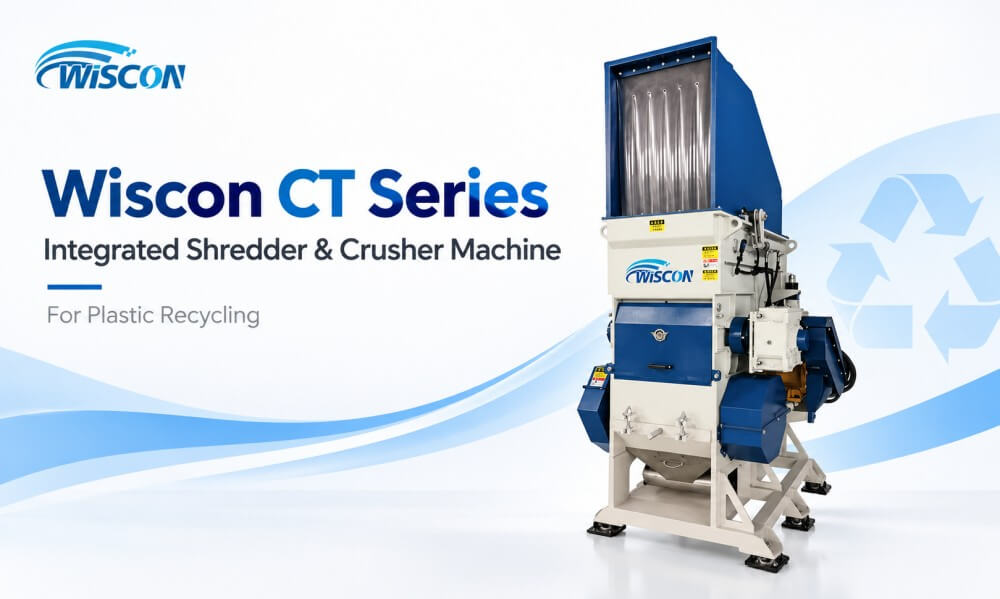 Why Are Integrated Shredder and Crusher Machines Gaining Attention in Solid Waste Recycling?
 200L Plastic Drum Shredder: How to Prevent Jamming and Improve Recycling Efficiency
 Is Leather Waste Recycling Profitable?
 How to Choose the Right Plastic Bucket Shredder for Small-Batch Paint Residue Plastic Recycling?
 Paper Mill Waste Recycling: Turning Paper Mill Rejects into RDF/SRF
