In modern plastic recycling and regeneration processes, shredders and crushers play critical roles as the core size-reduction equipment. Although both serve the purpose of breaking down materials, they differ significantly in function, working principles, and technical characteristics. Understanding these differences helps factories select the right equipment for their production lines, improving efficiency, reducing costs, and ensuring better-quality recycling.
1. Equipment Positioning and Functional Distribution
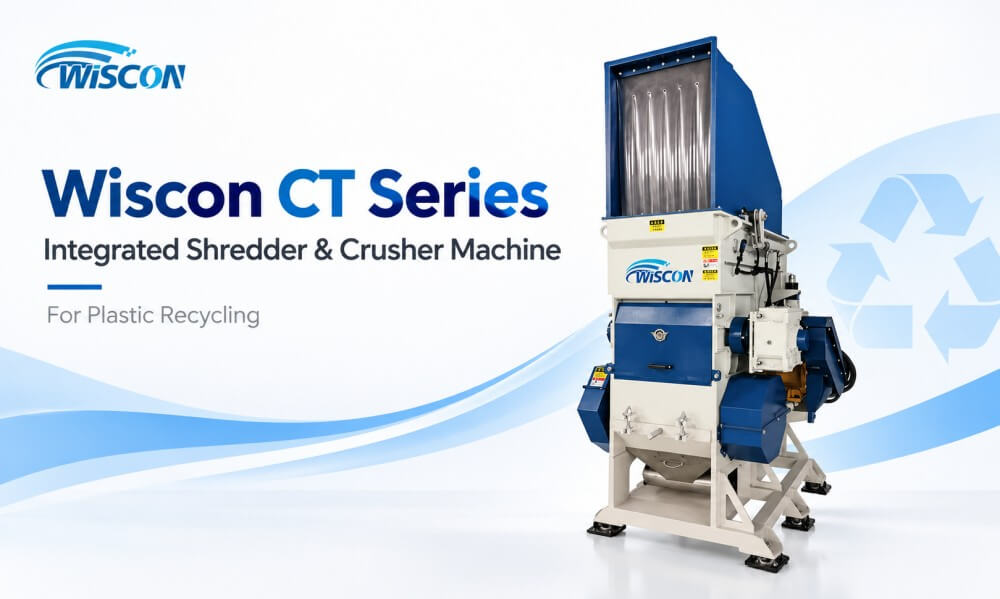
Plastic crushers are comprehensive size-reduction equipment that covers a broad range of processes from coarse crushing to fine grinding. In plastic recycling, crushers are used to further refine the material after it has undergone initial shredding, providing standardized raw material for subsequent granulation, modification, and other processes.
On the other hand, shredders primarily serve as the pre-treatment equipment for coarse size reduction, making them the first step in the crushing process. Their role is to reduce the size and shape of plastic materials, making them easier to handle in the next stages of the recycling process. Shredders play a vital role in the initial “coarse-crushing to fine-crushing” combination in plastic recycling lines.
2. Core Working Principles and Technical Differences
Shredders: Shredders typically use low-speed, high-torque designs with rotational speeds ranging from 300 to 600 RPM. They utilize differential cutting motion between dual or multi-axis blades to tear and break down large or irregularly shaped plastic materials, producing coarse particles of around 10-100mm. Shredders are particularly effective at handling tough plastics and materials containing impurities, avoiding issues such as material wrapping and thermal fusion.
Crushers: In contrast, crushers employ high-speed impact and shear mechanisms, typically operating at speeds ranging from 1000 to 3000 RPM. Crushers use the kinetic energy of rapidly rotating blades to strike and shear the material, further refining it into uniform particles ranging from 2 to 10mm. Crushers are the key equipment for fine size reduction, ensuring that the material meets specific quality standards for granulation and further processing.
3. Application Scenarios and Process Value
Shredders: As the primary equipment for pre-treatment in plastic recycling, shredders are used to handle a wide range of plastic materials, including PET bottles, HDPE drums, PP woven bags, ABS appliance housings, and more. By reducing the volume and shaping the plastic, shredders lower transportation costs and lay the groundwork for subsequent sorting and cleaning processes.
Crushers: Crushers are responsible for deep size reduction, offering precise control over the final particle size to meet specific requirements for granulation or material modification. They are critical in the plastic regeneration process, ensuring that the raw material for recycling meets the necessary standards for further processing.
4. Shredder and Crusher Process Collaboration
In modern plastic recycling lines, shredders and crushers typically work in tandem, forming a “coarse-crushing to fine-crushing” process. Shredders handle the initial size reduction and volume reduction, while crushers perform further refinement. This combination significantly improves the efficiency of the production line and ensures the quality of the recycled material.
5. Wiscon‘s Shredder Application Example
As a leading expert in the waste recycling industry, Wiscon has over ten years of experience in the field of waste management and recycling. Their DL dual-shaft shredderplays a crucial role in plastic recycling, especially for industrial waste, municipal solid waste, and other mixed waste materials.
The Wiscon DL dual-shaft shredder features a high-torque design, operating at low speeds, making it highly effective for handling various plastic materials. Its blades are made from high-strength, high-wear-resistant 42CrMo alloy material, and its precision-engineered spline and hexagonal shafts ensure uniform torque distribution, improving the shredding efficiency and extending the service life of the main shaft. Additionally, the machine is equipped with dual independent motors and a high-security gear reducer, providing continuous, stable torque output for shredding operations.
The Wiscon DL dual-shaft shredder has become the core equipment for large plastic recycling projects, providing essential support for the efficient development of the plastic recycling industry.
Frequently Asked Questions (FAQ)
Q1: Can shredders and crushers be used individually?
While both shredders and crushers have specific functions, they are often complementary. Shredders handle coarse size reduction, while crushers refine the material further. Using both equipment together ensures more efficient plastic recycling.
Q2: What are the main differences between shredders and crushers?
Shredders focus on coarse size reduction with low speeds and are suited for handling tough and impurity-laden plastics. Crushers, on the other hand, operate at higher speeds and are used to achieve fine size reduction, producing uniform particles.
Q3: How do I choose the right equipment?
When choosing equipment, consider the type of material, the required particle size, the production capacity, and energy consumption. Shredders are ideal for large or irregularly shaped materials, while crushers are better suited for high-precision size reduction.


 1. Equipment Positioning and Functional Distribution
 3. Application Scenarios and Process Value
 Frequently Asked Questions (FAQ)
 Why Are Integrated Shredder and Crusher Machines Gaining Attention in Solid Waste Recycling?
 200L Plastic Drum Shredder: How to Prevent Jamming and Improve Recycling Efficiency
 Is Leather Waste Recycling Profitable?
 How to Choose the Right Plastic Bucket Shredder for Small-Batch Paint Residue Plastic Recycling?
 Paper Mill Waste Recycling: Turning Paper Mill Rejects into RDF/SRF
