Not everything entering a recycled paper mill becomes pulp.
During OCC pulping, screening and cleaning, paper mills continuously generate a complex waste stream containing ragger ropes, plastic films, residual paper fibers, wires, baling straps, rubber, sand and other contaminants.
These materials are commonly referred to as paper mill rejects.
For many recycled paper mills, the challenge is not simply how to remove these rejects from production. The real challenge is how to process a wet, heterogeneous and highly entangled waste stream reliably, without creating excessive disposal costs or frequent equipment downtime.
Landfilling remains expensive in many regions, while direct incineration is often inefficient because untreated paper mill rejects can contain metals, inert materials, excessive moisture and inconsistent combustible content.
A more practical approach is to separate recyclable metals and non-combustible contaminants first, then process the remaining combustible fraction into RDF (Refuse Derived Fuel) or SRF (Solid Recovered Fuel).
Wiscon designs modular shredding and separation systems specifically for this type of application.
Why Are Paper Mill Rejects Difficult to Process?
Paper mill waste behaves very differently from conventional municipal solid waste.
The material is often tough, wet, flexible and heavily intertwined. A successful recycling system must therefore be designed around the physical characteristics of the waste rather than simply around the required throughput.
Ragger Ropes Easily Wrap Around Rotors
Ragger ropes are one of the most difficult materials produced during recycled paper pulping.
They typically contain a mixture of:
steel wire
plastic film
adhesive tape
textile-like fibers
residual paper fiber
flexible packaging material
Because ragger ropes are long and highly tensile, they can easily wrap around high-speed rotors or shafts.
For this reason, paper mill rejects are usually better handled by low-speed, high-torque shredding technology capable of cutting, tearing and opening long entangled materials before downstream separation.
The goal of the first shredding stage is not to produce the final RDF size.
Its main function is to break open the material and make the different fractions easier to separate.
Metals and Inert Materials Increase Wear
Recovered paper often enters the mill with steel baling wire, metal straps and other metallic contaminants.
If these materials are allowed to pass directly into secondary shredders or downstream fuel preparation equipment, they can increase:
knife wear
screen damage
conveyor damage
maintenance frequency
unplanned downtime
Sand, stones, glass and other heavy inert materials also have little or no fuel value.
A properly designed paper mill waste recycling line should therefore do much more than simply reduce particle size.
A typical process is:
Primary shredding → metal separation → heavy fraction removal → combustible fraction cleaning → secondary shredding → RDF/SRF preparation
Moisture and Material Composition Are Not Constant
Paper mill rejects are not a standardized raw material.
Their composition can change depending on:
recovered paper quality
OCC supplier
pulping technology
paper grade
screening configuration
production conditions
One batch may contain mainly plastics and fibers, while another may contain more wire, grit or wet pulp residue.
High-moisture pulp rejects and sludge require particular attention.
Moisture directly affects the net calorific value of the final fuel and may significantly influence transportation, storage and combustion performance.
Before designing an RDF/SRF line, Wiscon therefore recommends evaluating key material parameters such as:
waste composition
average moisture content
peak moisture content
metal content
inert fraction
bulk density
hourly throughput
required output size
final fuel application
In many projects, this material analysis is more important than selecting the shredder itself.
Wiscon Paper Mill Waste RDF/SRF Processing System
Wiscon uses a modular approach to paper mill waste recycling.
The exact equipment configuration depends on the incoming waste and the required final product, but a typical system includes several key stages.
1. Feeding and Primary Shredding
Paper mill rejects are first introduced into the system through a heavy-duty conveyor or feeding unit.
The material then enters the primary shredder.
At this stage, the objective is to:
reduce oversized waste
cut long ragger ropes
open compacted material
release metals trapped inside plastic and fiber
prepare the waste for separation
For rejects containing large amounts of ragger rope and flexible plastics, a low-speed twin-shaft shredder is often more suitable than a conventional high-speed grinder.
High torque helps the machine process difficult material while reducing the risk of uncontrolled wrapping.
2. Ferrous Metal Separation
After primary shredding, steel wire, baling straps and other ferrous metals become easier to release from the waste stream.
An overband magnet or another magnetic separation system can then remove these materials.
This stage serves two purposes.
First, it protects downstream shredders, screens and conveyors from unnecessary wear.
Second, recovered ferrous metals can be collected and sent to metal recycling.
Where significant quantities of aluminum or other non-ferrous metals are present, additional separation technology can be incorporated into the system.
3. Screening and Heavy Fraction Removal
The shredded waste still contains contaminants that are unsuitable for fuel production.
Depending on the waste composition, the line may include equipment such as:
trommel screens
vibrating screens
air separators
density separators
heavy fraction separators
These systems help remove stones, glass, grit and other non-combustible materials.
The aim is to concentrate the lighter combustible fraction, mainly consisting of:
plastic + residual paper fiber + other suitable combustible materials
Removing inert contaminants also helps reduce ash content in the final RDF/SRF.
4. Secondary Shredding
Once metals and heavy contaminants have been removed, the combustible fraction can be sent to a secondary shredder.
This stage controls the final fuel size.
Depending on the receiving plant, the material may be processed into sizes in the range of approximately 30–100 mm, although there is no universal RDF particle size.
The correct size depends on the final application, including:
cement kiln feeding systems
storage configuration
pneumatic or mechanical conveying
boiler feeding equipment
fuel dosing systems
Where a narrow particle-size distribution is required, the system can also include screening and recirculation of oversized material.
RDF vs. SRF: What Is the Difference?
RDF and SRF are often used interchangeably, but they are not exactly the same.
RDF is a broad term for fuel produced from processed waste.
SRF, by contrast, is generally associated with more defined and controlled fuel quality characteristics.
This means that shredded waste does not automatically qualify as SRF.
For a recovered fuel to be suitable for a specific industrial application, parameters such as the following may need to be evaluated:
net calorific value
chlorine content
mercury content
moisture
ash
particle size
bulk density
For paper mill rejects, chlorine deserves particular attention.
Recovered paper streams may contain PVC, labels, adhesives, laminated packaging and other chlorine-bearing materials.
A fuel with a high calorific value may still be unsuitable for a particular cement kiln or industrial boiler if the chlorine content is too high.
The objective of a professional RDF/SRF preparation line is therefore not simply to make waste smaller.
The objective is to make the fuel more consistent, cleaner and easier to control.
Where Can RDF/SRF from Paper Mill Rejects Be Used?
Once the combustible fraction has been properly processed, it can be evaluated for use in several industrial energy applications.
Cement Kilns
Cement production requires large amounts of thermal energy, making cement kilns one of the major users of alternative fuels.
After metal removal, contaminant separation and size reduction, combustible paper mill rejects may be used as an alternative fuel, provided they meet the receiving plant’s technical and regulatory requirements.
Typical acceptance parameters may include:
calorific value
moisture
ash
chlorine
restricted metals
particle size
bulk density
For this reason, RDF quality should always be matched to the requirements of the final user.
Industrial Energy Facilities
Properly prepared alternative fuel may also be accepted by industrial energy facilities equipped to handle RDF or SRF.
For paper mills operating their own suitable energy systems, on-site utilization may also be considered.
This can potentially reduce long-distance transportation of rejects and improve control over the mill’s waste stream.
However, RDF cannot simply be fed into any standard boiler.
Its use depends on the combustion system, permits, emission-control equipment and applicable local regulations.
Economic Value of Paper Mill Waste Recycling
The value of an RDF/SRF project should not be measured only by the selling price of the fuel.
A complete business case normally includes several different value streams.
Lower Waste Disposal Costs
By separating recyclable and combustible materials, the amount of waste requiring external disposal can be reduced.
This may lower:
landfill costs
third-party disposal fees
transportation expenses
The actual savings depend heavily on local waste management costs.
Metal Recovery
Steel wire, baling straps and other ferrous materials contained in paper mill rejects can be separated and recovered.
Although metal recovery may not be the largest revenue source in every project, it can create additional value while protecting downstream equipment.
Higher Value from the Combustible Fraction
Untreated mixed waste is difficult to use because its composition, particle size and contaminant level are unstable.
After processing, the combustible fraction becomes a more consistent alternative fuel.
This can make it easier to establish long-term supply relationships with:
cement plants
industrial boilers
waste-to-energy operators
other authorized alternative fuel users
Better Control of the Waste Stream
Relying entirely on external disposal leaves a paper mill exposed to changing disposal prices, transportation constraints and waste acceptance policies.
Installing an in-house preprocessing system gives the mill greater control over how its rejects are handled.
How to Evaluate the ROI of a Paper Mill RDF Project
There is no universal payback period for a paper mill waste recycling line.
The economics depend on several local factors.
A realistic ROI analysis should consider:
**Current disposal cost
transportation cost
metal recovery value
RDF/SRF value
electricity consumption
labor cost
wear-part cost
equipment investment**
This is why Wiscon does not recommend selecting an RDF line only by nominal throughput.
Two paper mills producing the same tonnage of rejects can require completely different process configurations.
Why Paper Mill RDF Lines Need to Be Customized
No two paper mill waste streams are exactly the same.
One mill may generate mostly light plastic and paper fiber.
Another may produce a much more difficult mixture containing:
ragger ropes
steel wire
sand
wet pulp residue
rubber
multilayer packaging
If the system is selected only according to tons per hour, common problems may include:
material wrapping around shafts
excessive knife wear
unstable magnetic separation
high final moisture
high ash content
inconsistent RDF particle size
lower-than-expected throughput
A more reliable approach is to evaluate the waste first and design the equipment around the material.
Wiscon can then determine the appropriate combination of:
primary shredding
magnetic separation
screening
air separation
heavy fraction removal
secondary shredding
conveying
dust control
For difficult applications, material testing can also be used to verify the processing concept before final system configuration.
Wiscon Paper Mill Waste Recycling Solutions
Wiscon specializes in industrial waste shredding and recycling systems.
For paper mills, Wiscon can design modular RDF/SRF preparation lines based on the actual reject composition, plant capacity and final fuel requirements.
Additional modules can be integrated when required, including:
automatic metal removal
recirculation systems
dust collection
customized screening
separation equipment
storage and discharge systems
The key is not to install as many machines as possible.
Each stage should solve a specific processing problem.
First, reduce wrapping and oversized material.
Then remove metals.
Next, eliminate contaminants that do not contribute to fuel value.
Only after that should the material be finely shredded to the required final size.
This process logic helps improve line stability, reduce unnecessary wear and produce a more consistent RDF/SRF output.
Frequently Asked Questions
Can all paper mill waste be converted into RDF?
No.
Combustible materials such as plastics and residual paper fibers may be suitable for RDF production, but metals, stones, glass and other inert contaminants must be removed.
High-moisture sludge or pulp residue should be evaluated separately because drying cost, ash content and calorific value can significantly affect project feasibility.
What size should paper mill RDF be?
There is no universal RDF size.
The required particle size depends on the final fuel user and feeding system.
Some projects require material in the approximate range of 30–100 mm, while others may require a finer or coarser product.
Can ragger ropes be shredded directly?
Yes, but the shredder must be suitable for long, flexible and entangled material.
Low-speed, high-torque shredders are generally better suited to this application than conventional high-speed grinders.
Can steel wire from paper mill rejects be recovered?
Yes.
Primary shredding helps expose steel wire and baling straps so they can be removed by magnetic separation.
This protects downstream equipment and also allows the recovered metal to be recycled.
What information is needed to design a paper mill waste recycling line?
To evaluate a project, Wiscon typically needs:
photos or videos of the waste
material composition
moisture content
daily or hourly throughput
current waste disposal method
required RDF/SRF particle size
final fuel application
Based on this information, Wiscon can recommend the appropriate shredding, separation and fuel preparation process.
Paper mill rejects should not automatically be treated as disposal waste.
With the right shredding and separation process, recyclable metals can be recovered and suitable combustible fractions can be prepared for RDF/SRF applications.
If your paper mill is currently dealing with ragger ropes, OCC rejects, plastic-fiber mixtures or other pulping residues, send Wiscon your material photos, composition, moisture content and required capacity.
Our engineering team can evaluate the waste stream and recommend a suitable paper mill waste recycling system.


 Why Are Paper Mill Rejects Difficult to Process?
 Where Can RDF/SRF from Paper Mill Rejects Be Used?
 Wiscon Paper Mill Waste Recycling Solutions
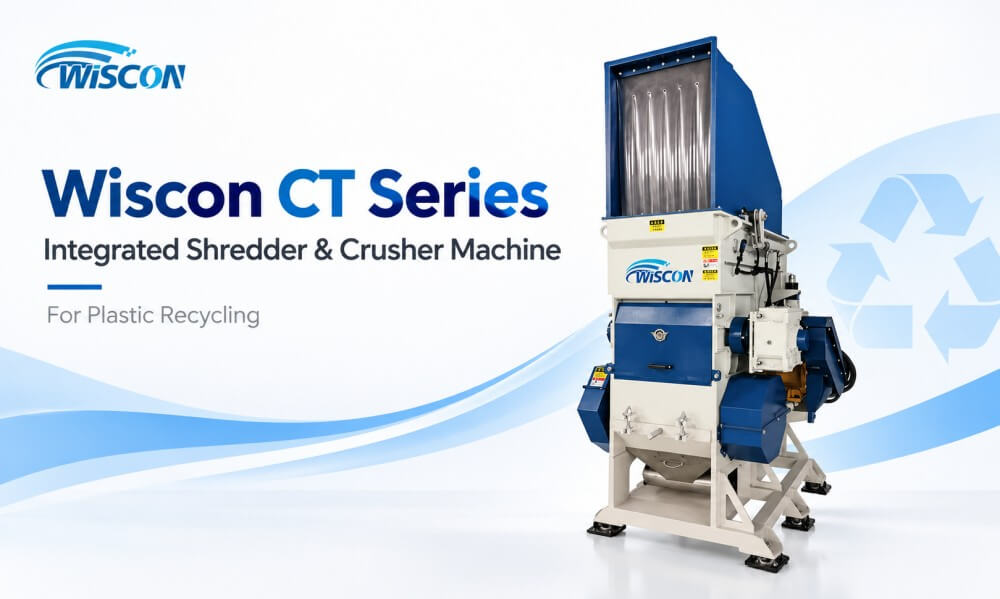 Why Are Integrated Shredder and Crusher Machines Gaining Attention in Solid Waste Recycling?
 200L Plastic Drum Shredder: How to Prevent Jamming and Improve Recycling Efficiency
 Is Leather Waste Recycling Profitable?
 How to Choose the Right Plastic Bucket Shredder for Small-Batch Paint Residue Plastic Recycling?
 Paper Mill Waste Recycling: Turning Paper Mill Rejects into RDF/SRF
