As urban populations expand and consumption continues to rise, municipal solid waste (MSW) volumes are increasing year by year. Disposal facilities are under growing pressure, making waste reduction and material recovery essential parts of modern solid waste management. Mechanical pre-treatment systems have become a practical engineering solution to reduce waste volume and recover usable materials.
This case study describes the operation of a full-scale MSW shredding and recovery line and analyzes its technical structure, operating performance, and economic outcomes.
Project Overview and Waste Characteristics
The project handles mixed municipal solid waste without prior source separation. The input material is highly heterogeneous and typically includes plastics, textiles, paper, organic residues, and minor metal impurities. Due to its loose structure, variable moisture content, and wide particle size range, direct sorting is not feasible.
To address these characteristics, the system applies a proven “two-stage shredding combined with downstream sorting” configuration. This process layout is commonly used in current MSW treatment projects and is regarded as technically mature and reliable.
Coarse Shredding Stage
The first processing stage focuses on coarse shredding. Its main functions are opening garbage bags, breaking down oversized materials, and achieving initial volume reduction.
This stage uses a PC8200D coarse shredder with approximate dimensions of 6700 × 4200 × 4200 mm. The unit provides a stable throughput of more than 15 tonnes per hour. It is equipped with an installed power of around 324 kW and operates with an average energy consumption of about 175 kWh per hour.
The output particle size is controlled within 150–600 mm, transforming bulky and irregular waste into a more uniform material flow. The objective at this stage is process stabilization rather than fine size reduction, which improves handling and consistency for the next steps.
Fine Shredding Stage
The second stage performs fine shredding to further reduce particle size and standardize the material. An M8300 fine shredder is installed, occupying approximately 6000 × 3500 × 4100 mm.
This machine is designed for a processing capacity exceeding 6 tonnes per hour, with an installed power of about 521 kW and an average energy consumption of roughly 361 kWh per hour. After fine shredding, the material size is consistently reduced to below 30 mm.
This particle size is suitable for downstream air separation, magnetic separation, and the production of refuse-derived fuel (RDF). Combustible components are effectively liberated at this stage, improving their value for further utilization.
System Layout and Operation
The complete shredding and recovery line covers an area of approximately 8,000 square meters. The total installed power of the system is about 868 kW, with combined energy consumption close to 565 kWh per hour.
Under continuous operation, the system requires only four operators for start-up, shutdown, inspection, and routine maintenance. This staffing level reflects a high degree of mechanization and automation.
Economic Performance
Economic viability is a key factor in long-term MSW treatment projects. Operating data show that labor costs average about 278 CNY per hour, while raw material processing costs are approximately 550 CNY per tonne.
After shredding and preliminary sorting, the processed material reaches a market value of around 1,150 CNY per tonne. When electricity consumption, labor expenses, and knife wear are included, the total operating cost is about 2,968 CNY per hour.
Based on current throughput and market conditions, the system generates an estimated net operating revenue of approximately 29,679 CNY per day. The payback period for the main shredding equipment is calculated at roughly six months.
Engineering Significance
This case demonstrates a practical approach to MSW resource recovery. Mechanical shredding enables effective volume reduction and particle size restructuring, creating suitable conditions for subsequent sorting and material reuse. While such systems do not replace incineration or landfill disposal, they play a critical role in upstream waste reduction and intermediate resource recovery.
The operational results confirm that shredding-based pre-treatment systems are a core component of modern urban solid waste management. With clearly defined process functions, stable performance data, and verifiable economic results, mechanical recovery of municipal solid waste has moved beyond theoretical concepts and become a scalable, repeatable engineering solution.


 Project Overview and Waste Characteristics
 Coarse Shredding Stage
 Fine Shredding Stage
 Engineering Significance
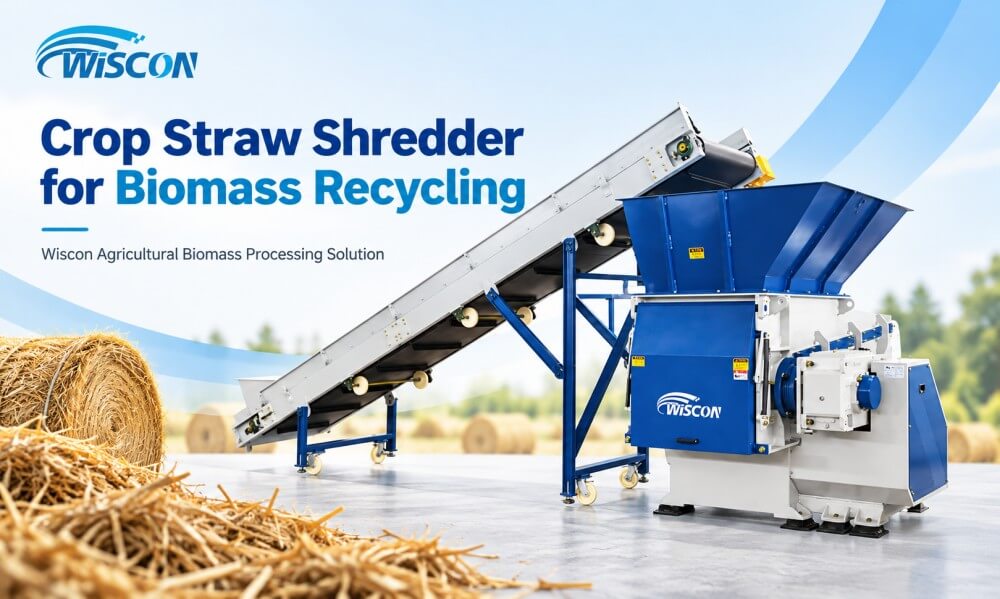 Crop Straw Shredder Supports Efficient Agricultural Biomass Recycling
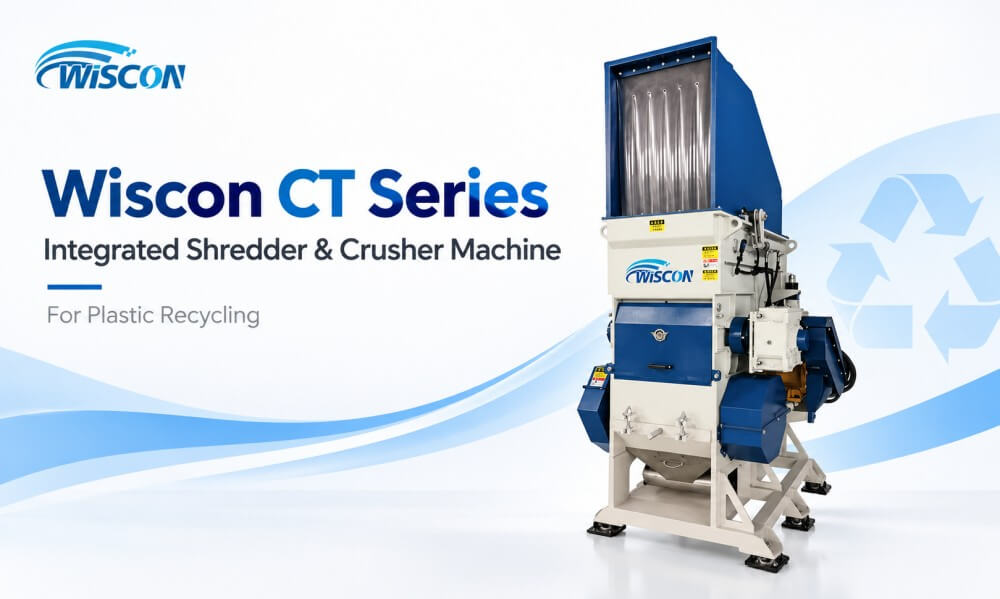 Why Are Integrated Shredder and Crusher Machines Gaining Attention in Solid Waste Recycling?
 200L Plastic Drum Shredder: How to Prevent Jamming and Improve Recycling Efficiency
 Is Leather Waste Recycling Profitable?
 How to Choose the Right Plastic Bucket Shredder for Small-Batch Paint Residue Plastic Recycling?
