Choosing the right crusher blades is one of the most important decisions in a recycling or solid waste processing line. Many production problems, such as low output, frequent jamming, high motor load, uneven discharge size and fast blade wear, are not always caused by the crusher machine itself. In many cases, the real issue is that the blades are not suitable for the material being processed.
Different materials require different cutting principles. Soft plastic film needs sharp cutting edges. Thick plastic pipes require both sharpness and impact resistance. Rubber and tires demand strong gripping ability and toughness. Metal scrap and mixed industrial waste require blades with better wear resistance and shock resistance.
In practical recycling operations, crusher blades can account for around 60% to 80% of the main wear-part cost of a crushing system. If the wrong blade is selected, the user may not only spend more on replacement parts, but also lose money due to machine downtime, lower productivity and higher maintenance costs.
That is why selecting crusher blades should not start with price. It should start with the material.
 Why Crusher Blades Cannot Be Chosen Randomly
A crusher blade is not just a piece of hardened steel. It is a working tool designed to cut, tear, shear or crush a specific type of material under a specific machine condition.
Before selecting blades, several questions should be answered:
What material will be crushed?
Is the material soft, hard, elastic or brittle?
Does it contain metal, sand, glass or other impurities?
What is the required output size?
Is the machine a single-shaft shredder, double-shaft shredder, four-shaft shredder or plastic crusher?
How many hours will the machine run per day?
For example, a blade used for PE film recycling should not be designed in the same way as a blade used for tire shredding. Film is soft and easy to wrap around the shaft, so the blade must cut cleanly and reduce winding. Tires are elastic and may contain steel wire, so the blade must have stronger teeth, better toughness and higher impact resistance.
In short, the material decides the blade structure, hardness, tooth design and steel grade.
Crusher Blades for Waste Plastics: PE, PP, PVC and ABS
Waste plastic is one of the most common materials in the recycling industry, but not all plastics behave the same during crushing.
For PE and PP film, woven bags, jumbo bags and agricultural film, the biggest challenge is wrapping and slipping. These materials are soft, thin and flexible. If the blade is not sharp enough, the material may be pulled instead of cut. This increases motor load and reduces output.
For these materials, the blade should have a sharp cutting edge, proper blade clearance and good wear resistance. The gap between fixed blades and rotating blades is especially important. If the gap is too large, the plastic will not be cut cleanly. If the gap is too small, the machine may generate excessive heat and consume more power.
For PVC pipes, HDPE pipes, plastic drums and pallets, the situation is different. These materials are thicker and harder. The blade must cut into the material while resisting impact. If the blade hardness is too high, it may chip when hitting thick plastic or hidden impurities. If the hardness is too low, the edge will wear quickly.
For many plastic crusher blades, a working hardness of around HRC 55–58 is commonly used, depending on the material and machine design. This range can provide a balance between sharpness, wear resistance and toughness.
For ABS, PC, nylon and glass-fiber-reinforced plastics, blade wear can be much faster. Glass fiber is highly abrasive. In this case, a higher-grade wear-resistant blade material is usually recommended. Regular blade inspection is also important, because a worn blade can reduce output and increase energy consumption.
Crusher Blades for Rubber and Tire Recycling
Rubber and tires are more difficult to process than ordinary plastics. Tire material is elastic, tough and often reinforced with steel wire or fiber. This means the blade must not only cut the rubber, but also grip, tear and withstand strong impact.
For tire recycling, double-shaft shredder blades are widely used. These blades usually have hook-shaped or multi-tooth designs to pull the tire into the cutting chamber. The goal is not only to cut, but also to create enough biting force.
A good tire shredder blade should have three key features:
It should have strong toughness to avoid cracking.
It should have enough tooth depth to grip the tire.
It should have stable wear resistance for long-term operation.
If the tire contains a high amount of steel wire, the blade hardness should not be too high. A very hard blade may look strong, but it can chip or crack when it hits steel wire. In many tire shredding applications, blade hardness is often controlled around HRC 52–56, depending on the shaft speed, torque and material condition.
For soft rubber blocks, sealing strips or rubber scraps, anti-wrapping performance becomes more important. The blade tooth design should help pull and cut the rubber continuously, while the feeding speed should be controlled to avoid shaft wrapping.
 Crusher Blades for Metal Scrap, E-Waste and Industrial Solid Waste
Metal scrap, electronic waste and industrial solid waste are more complex because the material composition is often mixed. A single batch may include plastic, copper, aluminum, iron, screws, rubber, circuit boards, cables, glass or sand.
In this type of application, the main risks are blade chipping and abnormal wear.
If the material contains a high percentage of metal, blade toughness becomes more important than sharpness. The blade must absorb impact without breaking. Alloy steel with proper heat treatment is often required. The surface should be wear-resistant, but the inner structure must still keep enough toughness.
For e-waste, such as small appliances, cables, circuit boards and plastic shells, low-speed high-torque shredders are usually more suitable. These machines reduce impact speed while increasing tearing force. The blades are often thicker, stronger and designed with multiple teeth.
For industrial solid waste, the challenge is uncertainty. Some materials may include sand, ceramic pieces, glass or stones. These impurities can seriously shorten blade life. In such cases, improving the blade material alone is not always the best solution. Pre-sorting is often more effective. Removing hard impurities before crushing can greatly reduce blade damage and machine downtime.
Five Key Parameters to Confirm Before Buying Crusher Blades
When purchasing crusher blades, a professional supplier should not only ask for dimensions. A correct blade recommendation requires complete working information.
The first parameter is the material type. The supplier should know whether the material is plastic film, pipe, rubber, tire, metal scrap, e-waste or mixed solid waste. It is also important to know whether the material contains impurities.
The second parameter is the machine type. Single-shaft shredders, double-shaft shredders, four-shaft shredders and granulators use different blade structures. A blade for a plastic granulator cannot be used as a double-shaft shredder knife.
The third parameter is the blade size. This includes outer diameter, inner hole, thickness, keyway size, number of teeth and blade quantity. Even a small dimensional error can cause uneven wear, poor cutting or installation failure.
The fourth parameter is the required output size. Coarse shredding, size reduction and fine crushing have different blade requirements. If the customer needs smaller output size, the blade design, screen size and cutting clearance must work together.
The fifth parameter is the working time and capacity requirement. A machine running four hours per day and a machine running 24 hours per day should not use the same blade standard. For continuous production, users should focus more on cost per ton, not only the price per set.
The Right Crusher Blade Reduces Cost Per Ton
The best crusher blade is not always the hardest blade, and it is not always the cheapest blade. A suitable blade must match the material, machine type, output size and working conditions.
For waste plastics, sharpness and wear resistance are important. For rubber and tires, toughness and gripping ability are critical. For metal scrap, e-waste and industrial solid waste, impact resistance and material stability matter most.
When choosing crusher blades, recycling companies should shift their focus from “How much is one set of blades?” to “How much does it cost to process one ton of material?”
A high-quality crusher blade does more than crush material. It helps the machine run more smoothly, reduces downtime, lowers maintenance costs and improves the profitability of the whole recycling line.
 FAQ
1. What are crusher blades used for?
Crusher blades are used in recycling and waste processing machines to cut, tear or crush materials such as plastic, rubber, tires, wood, metal scrap, e-waste and industrial solid waste.
2. What hardness is suitable for plastic crusher blades?
For many plastic crusher blades, a hardness range of around HRC 55–58 is commonly used. The exact hardness depends on the plastic type, blade material, machine speed and working conditions.
3. Are harder crusher blades always better?
No. If the blade is too hard, it may chip or crack under impact. A good crusher blade needs a balance between hardness, toughness and wear resistance.
4. Why do crusher blades wear out quickly?
Common reasons include abrasive materials, hidden metal impurities, incorrect blade clearance, poor heat treatment, wrong blade material or using blades that are not suitable for the processed material.
5. How can I extend the service life of crusher blades?
Use the correct blade material, control the feeding speed, remove hard impurities before crushing, adjust blade clearance properly and inspect the cutting edge regularly.


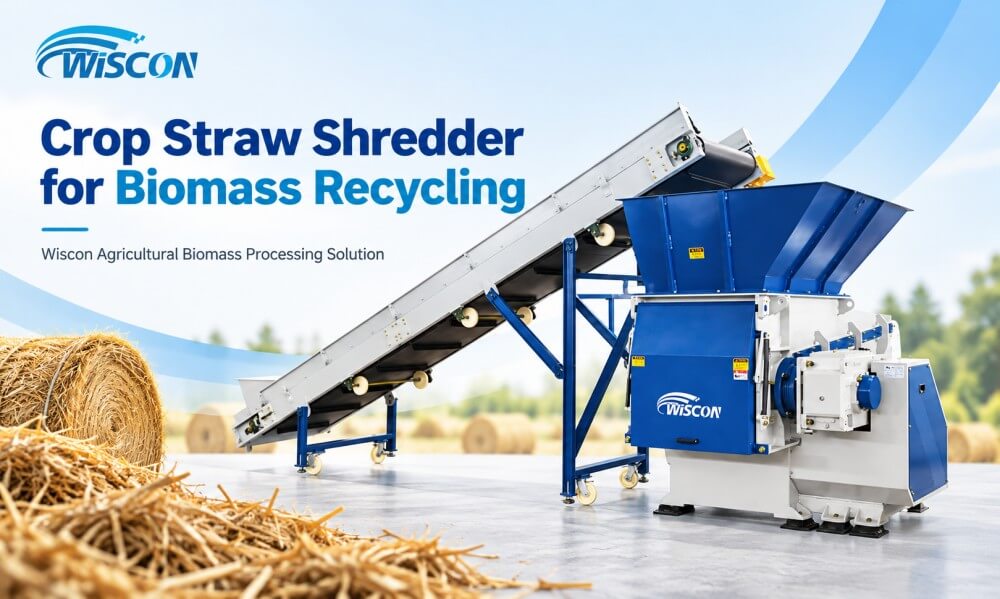 Crop Straw Shredder Supports Efficient Agricultural Biomass Recycling
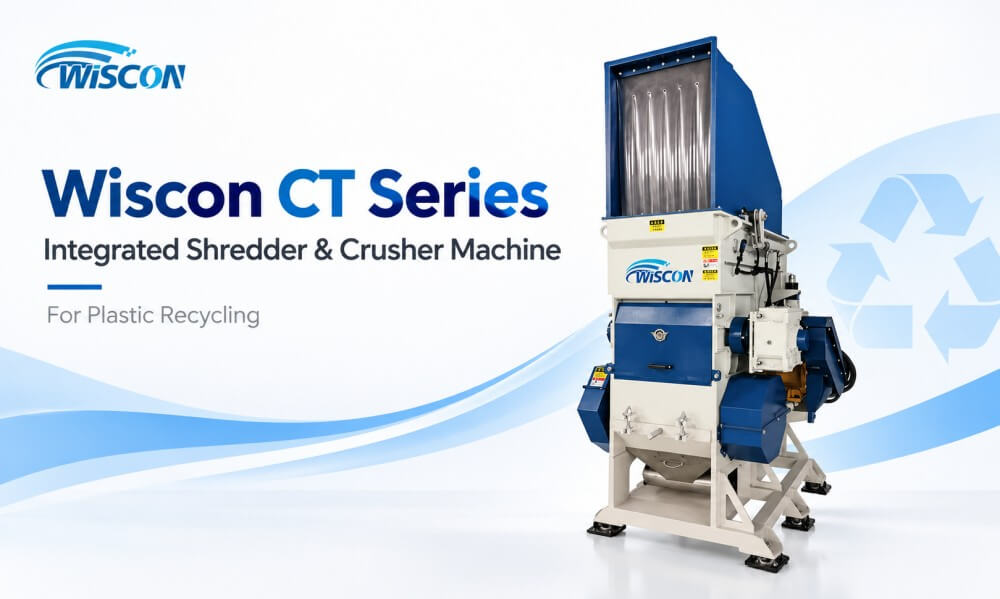 Why Are Integrated Shredder and Crusher Machines Gaining Attention in Solid Waste Recycling?
 200L Plastic Drum Shredder: How to Prevent Jamming and Improve Recycling Efficiency
 Is Leather Waste Recycling Profitable?
 How to Choose the Right Plastic Bucket Shredder for Small-Batch Paint Residue Plastic Recycling?
