In farms, wholesale markets, supermarkets, and produce distribution centers, damaged fruit baskets are a common type of rigid plastic waste. Most of these baskets are made from PP (polypropylene) or HDPE (high-density polyethylene) because both materials offer a strong balance of light weight, impact resistance, and durability. PP, for example, has a density of about 0.9 g/cm³, which helps manufacturers produce baskets that are sturdy without being unnecessarily heavy. HDPE grades used for crates, trays, and industrial containers are commonly around 0.95–0.96 g/cm³, giving them the stiffness and toughness needed for repeated handling and stacking.
That material strength is exactly why used baskets can become difficult to recycle once they are broken, deformed, or contaminated. They are bulky, hollow, and often reinforced with ribs, which means they occupy a large amount of storage and transport space before processing. At the same time, the recycling industry faces growing pressure to recover more rigid plastics efficiently. According to the OECD, global plastic waste reached 353 million tonnes in 2019, yet after recycling losses, only 9% was ultimately recycled. In that context, improving recovery of durable PP and HDPE items such as fruit baskets is no longer just a plant-level issue; it is part of a much larger shift toward more effective plastic circularity.
What Is a Fruit Basket Shredder and How Does It Work?
A Fruit Basket Shredderis a pre-processing machine designed to reduce whole plastic baskets into smaller, more manageable pieces before crushing, washing, and granulating. In most cases, rigid fruit baskets are too large and too irregular to feed directly into a granulator at a stable rate. A shredder solves that problem by using high-torque shafts and cutting blades to grab, tear, and size the baskets into strips or flakes suitable for downstream equipment.
In real plant design, this step matters because capacity has to stay balanced across the entire line. Commercial rigid-plastic recycling solutions for HDPE and PP crates, drums, bins, and similar materials are commonly offered in ranges such as 500–1000 kg/h and 1000–2000 kg/h, while industrial twin-shaft pre-shredders are often positioned in the 400–1600 kg/h range for medium-scale operations. That makes shredding a key sizing stage rather than just an optional add-on. If the shredder is undersized, it becomes the bottleneck. If it is matched properly, the whole basket recycling line runs more smoothly.
Why PP and HDPE Fruit Baskets Need Professional Basket Shredder Equipment
Fruit baskets may look simple, but the resin grades used to make them are not weak materials. HDPE grades used in industrial containers are specifically valued for stiffness, acceptable toughness, low warpage, and good processability. Dow, for example, lists HDPE resin applications including crates, cases, trays, tote boxes, and bins, with one such grade showing a density of 0.963 g/cm³. SABIC also lists HDPE injection grades for crate, pail, pallet, and logistic box applications, emphasizing high stiffness, toughness, and good ESCR (environmental stress crack resistance).
This is exactly why a professional Basket Shredder is needed. Damaged fruit baskets are rarely flat, clean, or uniform. Their ribbed walls, reinforced corners, and nested shapes make them much harder to grab and process than thin film or lightweight packaging. A low-torque cutter may bounce material, struggle with feeding, or create unstable output sizes. A purpose-built shredder, by contrast, gives the machine enough torque to bite into rigid baskets consistently, reducing overload risk and improving throughput stability.
For recyclers handling post-market or post-consumer baskets, the goal is not simply to break plastic. The real goal is to create a controlled, repeatable feedstock for the next stage. That is why professional shredding equipment is often the difference between a line that runs continuously and one that suffers from repeated blockages, uneven feeding, and excessive labor intervention.
Key Advantages of Using a Fruit Basket Shredder for Basket Recycling
The first major advantage of a Fruit Basket Shredder is volume reduction. Whole baskets are bulky, especially when they can no longer be stacked efficiently. Once shredded, they are easier to move, store, meter, and feed. This directly improves workshop organization and internal logistics.
The second advantage is line efficiency. Modern rigid-plastic recycling systems for HDPE and PP typically include pre-wash, washing, and granulation stages, and common industrial throughput bands already reach 500–2000 kg/h. At those rates, irregular manual feeding quickly becomes a problem. A shredder stabilizes the input stream, which helps downstream crushers and washers operate under more predictable load conditions.
The third advantage is lower wear and lower labor pressure. Instead of asking workers to manually break or reposition baskets at the hopper, the shredder does the heavy work at the front of the line. This reduces handling time and helps limit sudden shock loads on downstream equipment. In practice, that often means fewer stoppages, easier maintenance planning, and better daily output consistency.
Another important benefit is better end-product control. When basket material enters the washing and granulating stages in a more uniform size, contamination removal becomes easier and final flakes or regrind tend to be more consistent. For processors selling recycled PP or HDPE material back into molding or extrusion markets, consistency is often what separates low-value scrap from higher-value recycled feedstock.
How a Basket Shredder Improves Efficiency in PP and HDPE Plastic Basket Recycling
Efficiency in plastic recycling is not only about how fast a machine cuts. It is about how well the whole system works together. A good Basket Shredder improves efficiency by making the line more stable from the beginning. Instead of feeding full-size baskets directly into a crusher, the plant splits size reduction into a controlled first step and a secondary refining step. This reduces peak load on the crusher and improves overall line rhythm.
It also improves equipment matching. If your target output is in the range of 500–1000 kg/h or above, you need a front-end machine that can keep up with real-world feeding conditions, not just ideal test material. That is why many industrial recycling layouts use dedicated pre-shredding capacity in the 400–1600 kg/h band before washing and granulation. In other words, shredding is often the point where productivity is protected.
Applications of Fruit Basket Shredder Machines in Modern Basket Recycling Plants
Today, Fruit Basket Shredder machines are widely used in rigid-plastic recycling plants that process fruit crates, vegetable baskets, market trays, pails, pallets, and logistics boxes made from PP and HDPE. The typical layout is straightforward: shredding, crushing, washing, dewatering, and granulation or pelletizing. For rigid plastics such as crates and bins, this front-end shredding step is especially valuable because it converts awkward, high-volume input into a form the rest of the line can process efficiently.
As recycling standards continue to rise, the plants that perform best are usually the ones that control sizing early, reduce downtime, and maintain stable feed quality. A well-matched Fruit Basket Shredder does all three. For companies involved in basket recycling, it is not simply a cutting machine. It is a practical tool for increasing throughput, improving downstream performance, and turning bulky PP and HDPE basket waste into a more valuable recycled raw material.


 What Is a Fruit Basket Shredder and How Does It Work?
 How a Basket Shredder Improves Efficiency in PP and HDPE Plastic Basket Recycling
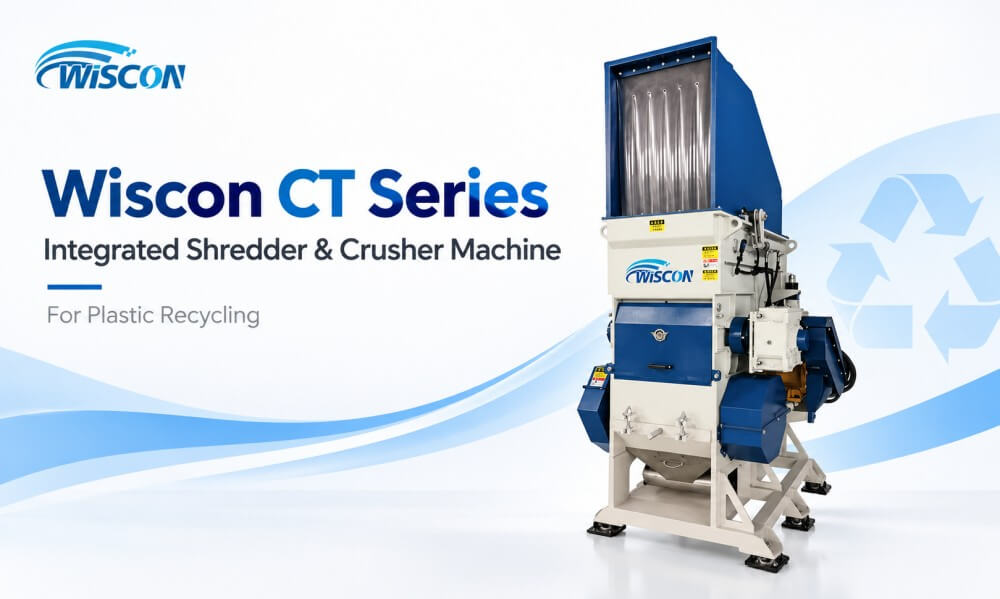 Why Are Integrated Shredder and Crusher Machines Gaining Attention in Solid Waste Recycling?
 200L Plastic Drum Shredder: How to Prevent Jamming and Improve Recycling Efficiency
 Is Leather Waste Recycling Profitable?
 How to Choose the Right Plastic Bucket Shredder for Small-Batch Paint Residue Plastic Recycling?
 Paper Mill Waste Recycling: Turning Paper Mill Rejects into RDF/SRF
